
Doug Ford brings anti-tariff push to Texas as trade tensions reshape Canada–U.S. relations
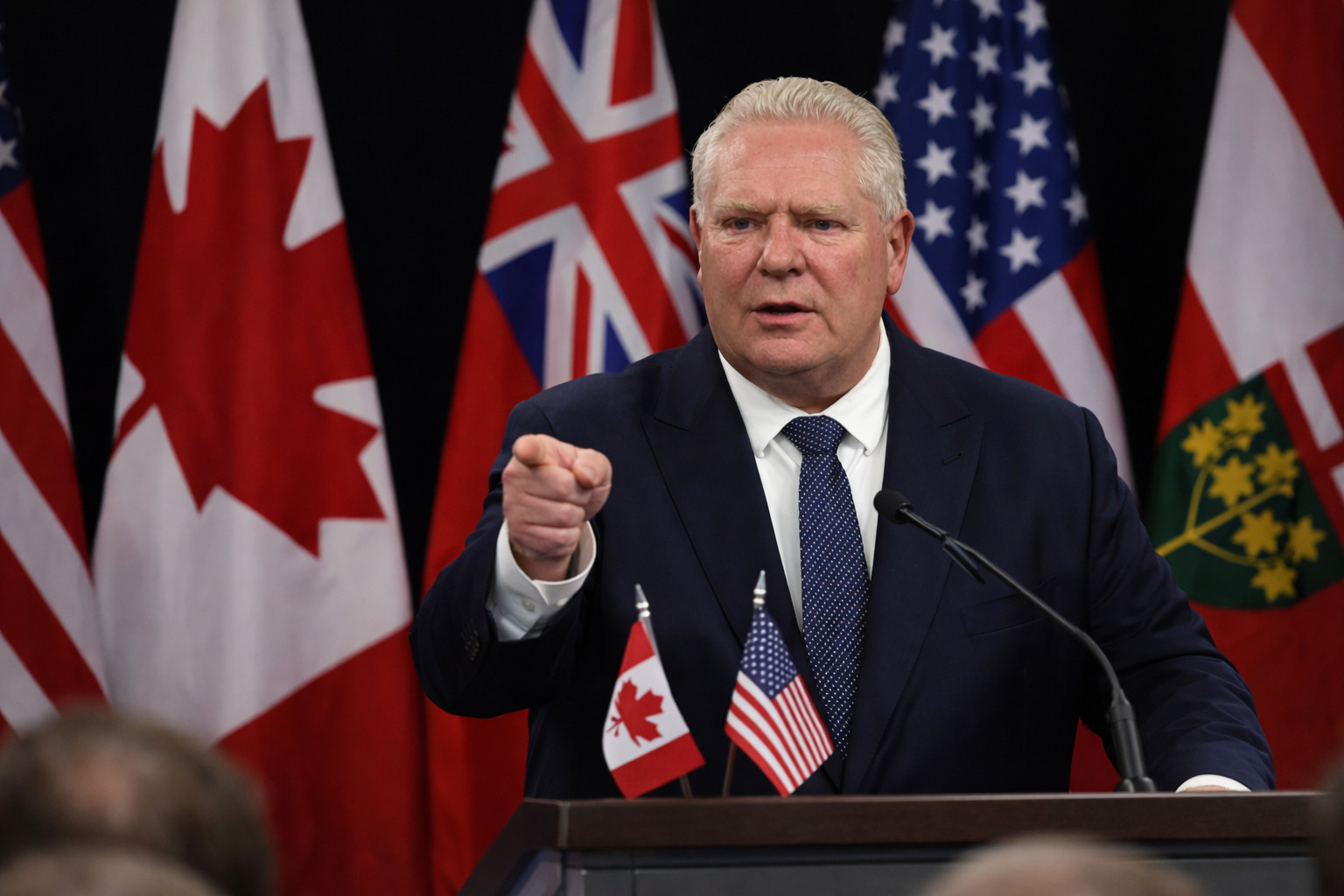
DALLAS — Ontario Premier Doug Ford has taken his message directly into one of the most politically and economically influential regions of the United States, positioning his visit to Texas as both a diplomatic signal and a strategic intervention.
At a time when trade friction between Canada and the U.S. continues to intensify, Ford’s three-day mission is less about ceremony and more about narrative control.
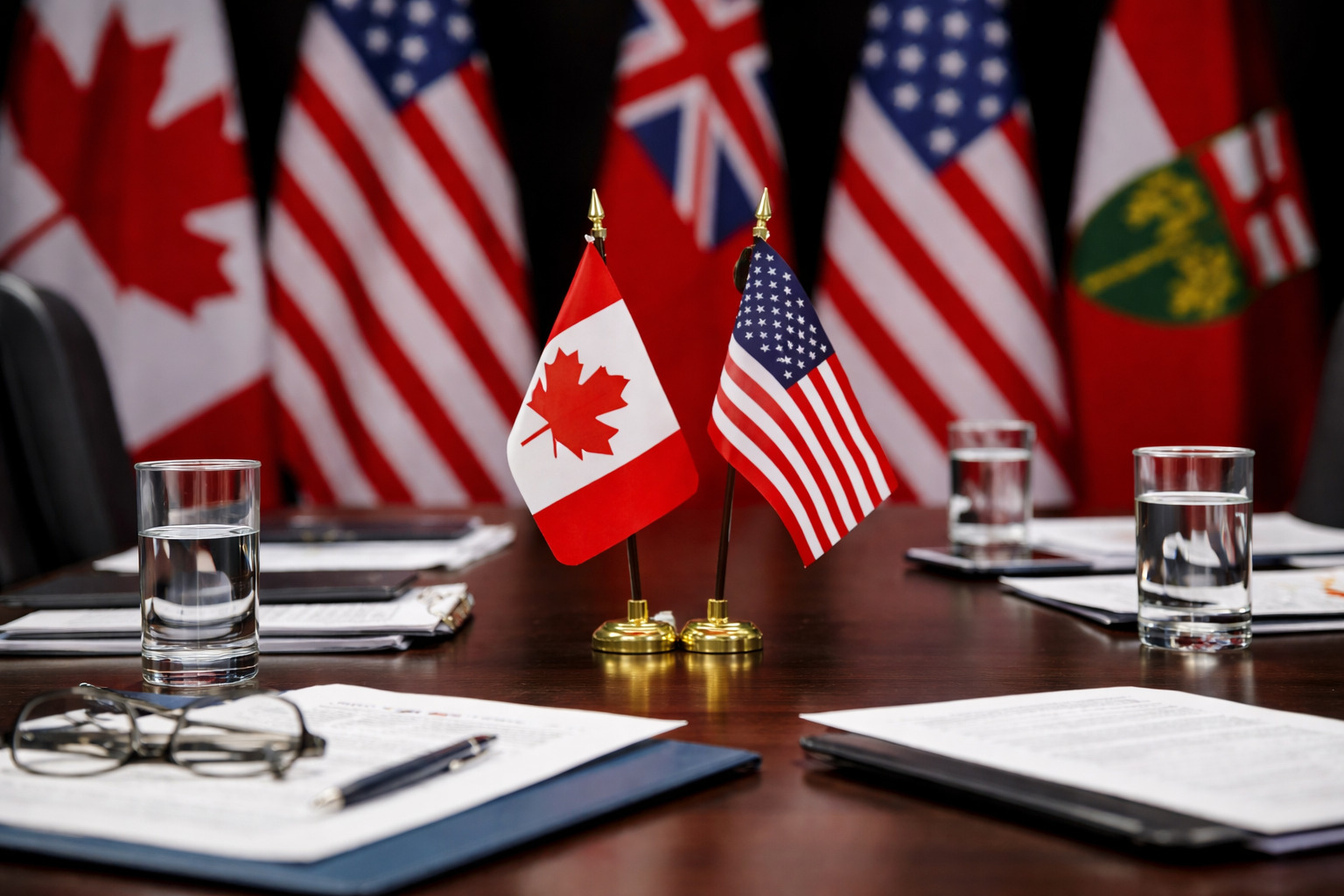
Entering a complex political landscape
Texas represents more than a symbolic destination.
It is a state with an economy exceeding $2 trillion — larger than that of most countries — and one that has consistently supported protectionist rhetoric in recent election cycles. In 2024, Donald Trump secured a decisive victory there, reinforcing the state’s alignment with tariff-driven economic policies.
Against this backdrop, Ford’s presence is deliberately counterintuitive.
He is advocating for open trade, reduced barriers, and economic interdependence in a political environment where those ideas are increasingly contested.
Yet, according to the premier, the response has been notably constructive.
He described his meetings with business leaders, lawmakers, and corporate stakeholders as “very positive” and “welcoming,” emphasizing that economic concerns — particularly cost of living — are taking precedence over ideological positions on tariffs.
Business over politics
Throughout his meetings, Ford has focused on a consistent message: trade between Canada and the United States is not a zero-sum equation.
Engagements with major companies — including representatives from sectors such as technology, energy, logistics, and healthcare — suggest that corporate priorities remain anchored in stability, supply chain efficiency, and predictable cross-border cooperation.
In private discussions, Ford indicated that support for tariffs was largely absent.
Instead, executives and policymakers repeatedly highlighted affordability pressures, rising operational costs, and the need for uninterrupted trade flows.
This alignment reveals a critical divergence.
While political discourse may emphasize protectionism, economic actors continue to prioritize integration.
A broader economic context
Ford’s visit unfolds within a shifting global environment.
Supply chains remain under pressure, energy demand is accelerating, and access to strategic resources — particularly critical minerals — is becoming a central geopolitical concern. According to recent industry estimates, global demand for key minerals used in energy and technology sectors is expected to double by 2030, placing additional strain on existing trade systems.
In this context, Ontario’s positioning becomes more strategic.
The province is emphasizing its nuclear energy capacity, resource availability, and role as a stable partner within a democratic framework. Officials accompanying Ford have framed this not simply as regional promotion, but as part of a larger argument for North American resilience.
Political criticism at home
Back in Ontario, the premier’s approach has drawn criticism from opposition leaders.
Concerns have been raised that bilateral outreach at the provincial level could complicate national negotiations, particularly as Canada prepares for a review of the Canada–United States–Mexico Agreement (CUSMA).
Critics argue that the strategy risks prioritizing visibility over outcomes, questioning whether high-profile engagements translate into measurable economic benefits.
They point to ongoing job losses in key sectors — including steel and automotive manufacturing — as evidence that broader structural challenges remain unresolved.
There is also criticism of timing.
With the provincial legislature recently reconvened after an extended break, some argue that the premier’s absence undermines domestic accountability.
Ford’s response: relationships as infrastructure
Ford has dismissed these critiques, framing international engagement as an essential component of economic leadership.
His argument is direct: growth requires presence.
Building trade relationships, he suggests, cannot be managed remotely or deferred indefinitely. It requires continuous interaction with partners, particularly in key markets such as the United States.
He has also broadened the scope of this approach, encouraging officials at all levels — from federal representatives to municipal leaders — to actively engage with global partners across North America, Europe, Asia, and beyond.
In this view, diplomacy is not episodic.
It is operational.
The Texas strategy
The structure of the visit reflects this mindset.
Meetings in Houston focused on industrial and energy stakeholders, while engagements in Dallas emphasized corporate partnerships. A planned stop in Austin, including a potential meeting with Greg Abbott, highlights the intention to connect both economic and political channels.
This multi-layered approach suggests that the mission is designed not only to respond to current tensions but to position Ontario within future negotiations.
Particularly relevant is the upcoming CUSMA review, which is expected to redefine key aspects of North American trade.
What this visit actually signals
At a superficial level, the trip fits the template of a conventional trade mission. In practice, it reflects a structural change in how trade influence is built and exercised.
Formal agreements no longer define the full scope of economic power. Real leverage increasingly emerges from proximity — from who is in the room, who sets the narrative, and who aligns early with corporate and regional actors before policy is formalized.
Trade is being shaped in parallel systems:
not only through treaties, but through networks.
Business leaders, state officials, and sector-specific partnerships are now active participants in defining outcomes that used to be negotiated exclusively at the federal level. This creates a distributed model of influence where positioning precedes policy.
It is not an attempt to negotiate terms directly.
It is an effort to embed Ontario within the decision-making environment where those terms will later be defined.
Conclusion
The impact of this mission will not be determined by announcements or short-term optics. It will be measured by whether these engagements translate into durable alignment across governments, industries, and supply chains.
This is not advocacy in the traditional sense.
It is strategic placement.
In a trade landscape increasingly shaped by geopolitical tension, resource competition, and fragmented alliances, access becomes a form of leverage. The actors who maintain direct, consistent relationships are the ones who influence direction before negotiations become visible.
The critical question is no longer how tariffs are structured once talks begin.
It is who has already secured relevance before those talks take place.

Noah Bennett
Cycling Industry & Tech Writer
Noah is passionate about the mechanics behind movement — from bike engineering to emerging mobility technologies. He covers innovations in cycling equipment, e-bikes, and urban transport solutions, combining technical understanding with real-world usability. His articles explore how technology is reshaping everyday transportation and redefining the future of city commuting.
Advertise With Toronto Union 24
Reach over 500,000 engaged Canadian readers monthly. Premium placements available for Q2 2026.
Learn More Liam Carter
  Aila Kenuak