
Essential Bike Maintenance Every Cyclist Should Know
A bike is a beautifully simple machine, and that simplicity means most of the maintenance it needs is well within reach of any rider, no workshop or mechanic's training required. A little regular care keeps your bike safe, makes it ride better, and saves a surprising amount of money by preventing small problems from becoming expensive ones. Whether you have just bought your first bike or you have been riding for years without ever touching a spanner, this guide covers the essential bike maintenance every cyclist should know, the handful of simple, repeatable tasks that make the biggest difference.
If you are still choosing your bike, start with our guide on how to choose the right bike for you, then come back here to keep it running smoothly.
Why regular maintenance matters
Skipping maintenance does not just risk a breakdown miles from home. A worn chain quietly grinds away at expensive gears; under-inflated tyres puncture more easily and slow you down; neglected brakes can fail when you need them most. None of these problems announce themselves loudly, which is exactly why a routine matters. Ten minutes a week prevents most issues and turns maintenance from a dreaded chore into a quick, satisfying habit.
The M-check: your pre-ride safety routine
Before any significant ride, run through the M-check, a quick top-to-bottom inspection that traces an "M" shape across the bike. It takes under two minutes and catches the things that matter for safety.
Front wheel and tyre: check it is secure, spins true, and the tyre is inflated and free of damage.
Front brake and bars: squeeze the lever to confirm firm braking, and check the handlebars and headset for any play.
Frame and saddle: look over the frame for damage and make sure the saddle is tight and level.
Pedals, cranks and chain: spin the cranks to feel for smoothness and check the chain runs cleanly.
Rear brake and wheel: confirm the rear brake bites and the rear wheel is secure and true.
Make this automatic and you will rarely be caught out.
Keep your tyres at the right pressure
Tyre pressure is the most impactful and most neglected piece of maintenance. Correctly inflated tyres roll faster, grip better, resist punctures and protect your wheels. Tyres lose air naturally over time, so check them at least weekly.
Find the recommended range printed on the tyre sidewall, given in psi or bar.
Use a pump with a gauge so you inflate to an accurate, repeatable pressure rather than guessing.
Adjust for conditions: slightly lower pressure adds grip and comfort on rough or wet surfaces; higher pressure within the range rolls faster on smooth roads.
Clean and lubricate the chain
The chain is the heart of your bike's drivetrain, and a clean, lubricated chain is the cheapest performance upgrade there is. A dirty, dry chain shifts poorly, wears quickly and drags expensive components down with it.
Wipe the chain regularly with a dry rag to remove grit and old grime, the simplest habit with the biggest payoff.
Degrease and clean it periodically when it is visibly dirty, using a chain cleaning tool or a brush and degreaser, then let it dry.
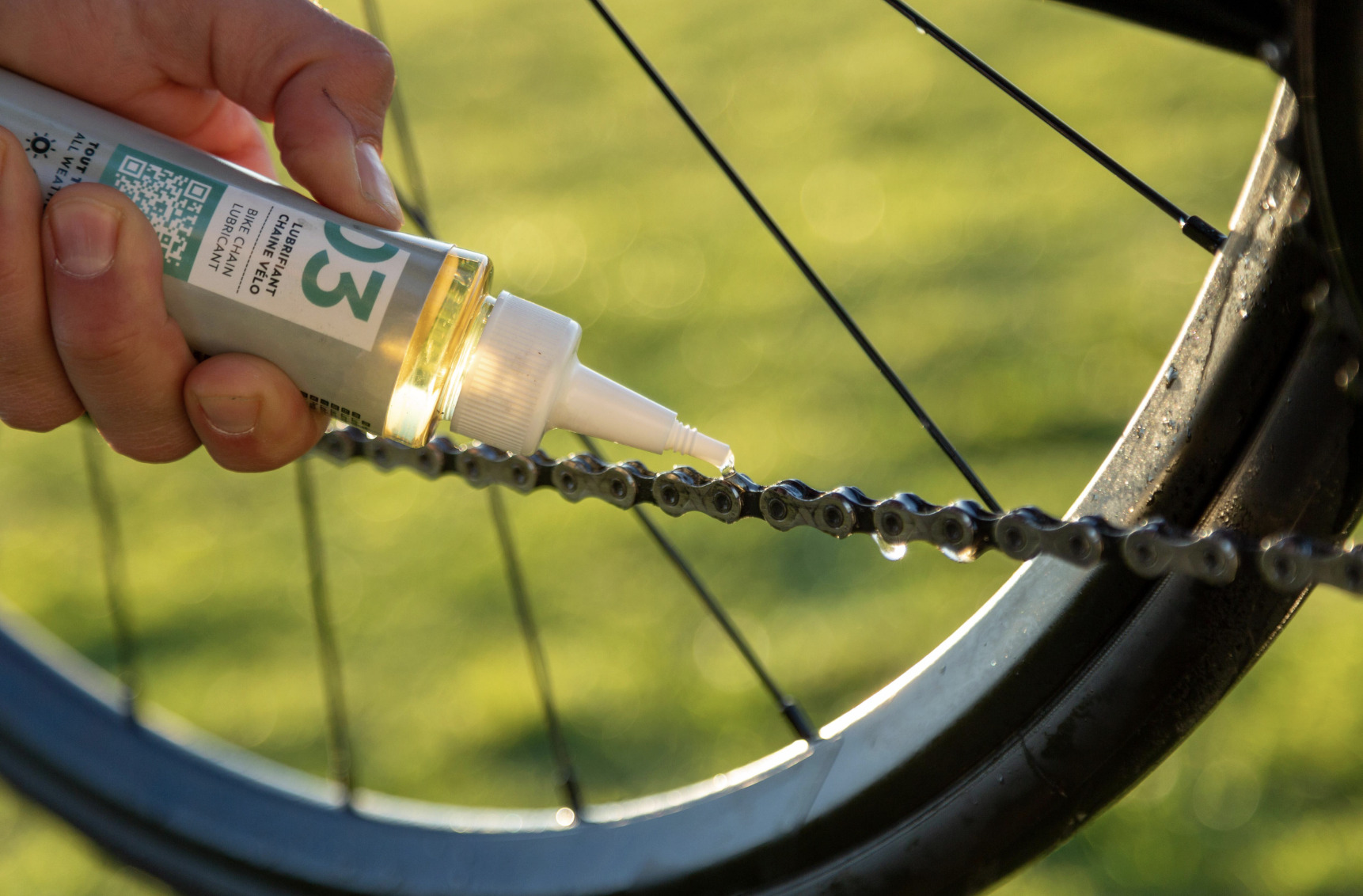
Apply a proper bike chain lubricant, one drop per link while backpedalling, then wipe off all the excess. A wet lube suits damp climates; a dry lube suits dusty, dry conditions.
Never use household oils like cooking oil or general-purpose spray lubricant, which attract grime and wash away quickly.
Check and maintain your brakes
Brakes are non-negotiable. Check them often and act early.
Test lever feel: brakes should engage firmly without the lever pulling all the way to the bar.
Inspect the pads for wear; most have a wear line or grooves that tell you when to replace them. Worn pads lengthen stopping distances dramatically.
For disc brakes, keep the rotors clean and free of oil, and watch for any squealing or reduced power as a sign they need attention.
For rim brakes, make sure the pads meet the rim cleanly and not the tyre.
Brake adjustment can be fiddly, so if anything feels wrong and you are unsure, this is a good moment to visit a shop.
Keep it clean
A clean bike is not just about looks. Washing away road grime, mud and salt prevents corrosion and lets you spot problems like cracks, wear or loose parts early. Use warm soapy water and a soft brush, avoid blasting high-pressure water directly into the bearings, and dry the bike before re-lubricating the chain. A regular wash genuinely extends the life of every component.
How to fix a flat
The one roadside repair every cyclist should master is fixing a puncture. Carry a spare tube, tyre levers and a pump or inflator, and the skill follows quickly with practice.
In short: release the brake if needed and remove the wheel, use the levers to ease one side of the tyre off the rim, remove the punctured tube, check the inside of the tyre for the thorn or glass that caused the flat, fit the new tube partially inflated, work the tyre back onto the rim, inflate to pressure and refit the wheel. Practising once at home, calmly, means you will not be stuck when it happens for real.
When to see a professional
Plenty of jobs are best left to a trained mechanic: wheel truing, replacing a worn drivetrain, bleeding hydraulic brakes, fitting headset or bottom bracket bearings, and any structural concern with the frame. A good rule is an annual full service for a regularly used bike, plus a professional check whenever something feels wrong that you cannot confidently diagnose. Knowing your limits is itself part of good maintenance.
The bottom line
Essential bike maintenance is really a small set of habits: a quick M-check before rides, weekly tyre pressure, a clean and lubricated chain, healthy brakes, a regular wash and the confidence to fix a flat. Spend a few minutes on these each week and your bike will be safer, faster and far longer-lived, and you will spend more time riding and less time repairing.
Frequently asked questions
How often should I clean and lubricate my bike chain? Wipe the chain down regularly, ideally after wet or dirty rides, and re-lubricate whenever it looks dry, sounds noisy or after cleaning. Degrease and deep-clean it periodically when visibly grimy. Always use a proper bike chain lubricant, never household oils.
What tyre pressure should I use? Use the range printed on the tyre sidewall, measured in psi or bar, and inflate with a gauged pump. Within that range, run slightly lower pressure for grip and comfort on rough or wet surfaces and slightly higher for speed on smooth roads. Check pressure at least weekly.
What is an M-check? The M-check is a quick pre-ride safety inspection that traces an M shape across the bike: front wheel and tyre, front brake and bars, frame and saddle, pedals, cranks and chain, then rear brake and wheel. It takes under two minutes and catches most safety issues.
Which maintenance jobs should I leave to a bike shop? Leave wheel truing, hydraulic brake bleeding, drivetrain replacement, bearing and headset work, and any frame damage to a professional. A good guideline is a full annual service for a regularly ridden bike, plus a shop visit whenever something feels wrong that you cannot confidently fix yourself.

Daniel Hughes
Sustainability & Policy Correspondent
Daniel is interested in how environmental policy translates into real urban change. He specializes in sustainable mobility, climate-focused city planning, and the political frameworks behind transport systems. His writing brings together data, policy analysis, and on-the-ground impact, offering a clear view of how sustainability initiatives affect everyday urban life.
Advertise With Toronto Union 24
Reach over 500,000 engaged Canadian readers monthly. Premium placements available for Q2 2026.
Learn More Noah Bennett