
Someone Shot at the US Consulate in Toronto and What Came After Tells You More Than the Shooting Itself
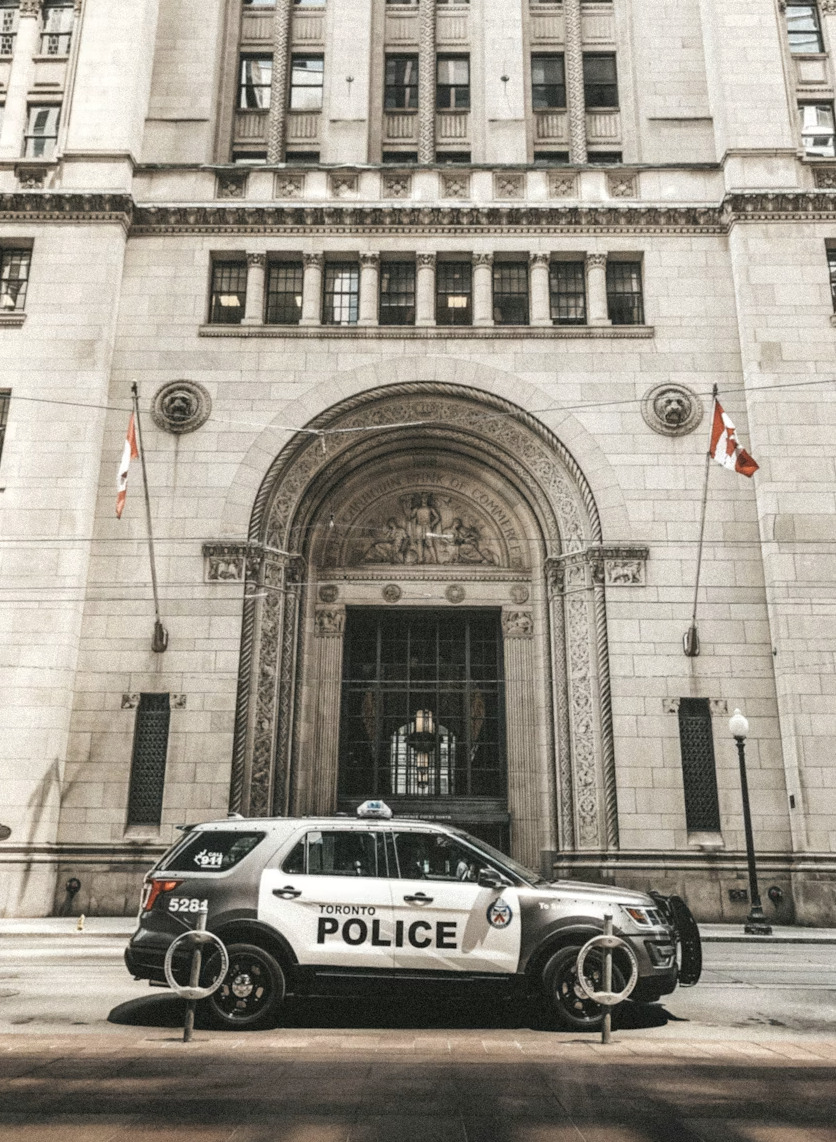
At 5:29 in the morning on Tuesday, March 10, a witness flagged down a Toronto Police constable on Queen Street West to report gunshots. Investigators believe the shots were fired roughly an hour earlier — around 4:30 a.m. — when two men exited a white Honda CRV, discharged what appeared to be a handgun at the front of the US Consulate in downtown Toronto, and drove away.
No one was injured. The building, as Deputy Chief Frank Barretto of the Toronto Police Service explained at the joint news conference held outside the consulate later that morning, is "highly secure, highly fortified." He noted that staff inside may not have noticed the gunfire at all. Shell casings were found on the street. Damage was visible on the exterior.
It was, in the clinical language of RCMP Chief Superintendent Chris Leather, "definitely a national security incident." Whether it was a terrorist event, Leather said, would be "subject to the investigation that will be undertaken in the coming days and weeks."
Two months later, that investigation continues. The suspects have not been publicly identified. The motive has not been confirmed. And the incident sits, unresolved, inside a pattern of events that the spring of 2026 produced in Toronto and that no individual investigation has yet fully explained.
What Was Already Happening Before the Consulate
The shooting did not arrive without context. It arrived inside a sequence.
In the days before the consulate attack, two synagogues in the Greater Toronto Area had been struck by overnight gunfire. No injuries in either case. Bullet holes were found in the front door of one. Toronto Police were already running an elevated response to Jewish community institutions across the city. Mayor Olivia Chow, speaking at city hall in the hours after the consulate shooting, addressed both: "This cannot stand."
Deputy Chief Barretto was direct about the investigative connection his team was considering. "It is not lost on us that the city has unfortunately experienced similar types of events, extremely serious and very concerning shootings at synagogues, and this very much factors into how we will approach this matter."
Shortly before all of this — in early March — gunfire also struck an Iranian-owned gym in Thornhill. The incidents spread across the GTA without obvious organisational pattern. What connected them, at least as a working hypothesis, was the global event that had changed the threat environment in Toronto almost overnight: the US-Israeli military campaign against Iran, which began with the assassination of Iran's Supreme Leader Ayatollah Ali Khamenei in a US-Israeli airstrike.
The consulate shooting came days after a US Embassy bombing in Oslo, Norway, in which Norwegian authorities later arrested three brothers with connections to Iraq on suspicion of a terrorist act they believed may have been ordered by a foreign state actor. American diplomatic missions globally had increased security and recalled non-essential staff as suspected retaliatory strikes multiplied.
Toronto was, in Leather's words, one of the places that now "deserved a heightened amount of vigilance and security." That is a remarkable thing to say about a city that has historically been remarkable for its stability.
The Diplomatic Response
US Ambassador to Canada Pete Hoekstra called the shooting "deeply troubling" and wrote on X that his team was in close contact with Toronto Police and Canadian authorities. "Our work continues, we will not be intimidated."
Prime Minister Mark Carney characterised it as "a reprehensible act of violence and attempt at intimidation" and pledged that the perpetrators would "feel the full weight of justice." Public Safety Minister Gary Anandasangaree called it "absolutely unacceptable," adding that "Canada will never tolerate intimidation and violence of any kind, including towards our American friends in Canada."
The speed and consistency of the political response reflected the weight of what had happened. This was an attack on a US diplomatic facility on Canadian soil, during a period when the US-Canada relationship was already under strain from the tariff dispute and annexation rhetoric from Washington. An active US war producing global retaliatory pressure on American diplomatic missions, combined with pre-existing community tensions in Toronto, created a situation where the investigative and diplomatic machinery activated simultaneously and at a level of intensity the city had not seen in years.
When Leather was asked directly whether there were sleeper cells operating in Canada, his answer was characteristically careful: "I don't have any information to provide at this time on any sleeper cells that may or may not exist in Canada. Suffice to say that our CSIS counterparts and the incidents across the country are actively investigating matters such as this, and we will continue to do so."
That answer neither confirmed nor denied the most alarming interpretation of the situation. It also, in its carefulness, indicated that the possibility was being taken seriously enough to require that kind of response rather than a straightforward denial.
What Has and Has Not Happened Since
No arrests have been publicly announced in connection with the consulate attack. The white Honda CRV was identified from security footage and an image was released publicly, but no suspects have been named. The investigation remains active, involving Toronto's Integrated Gun and Gang Task Force, RCMP, CSIS, and US agencies including the FBI.
The pattern of incidents surrounding March 10 has not been officially connected to any single actor or network. The synagogue shootings, the gym attack in Thornhill, and the consulate incident may be related; they may not be. The investigations proceed in parallel, and the public record has not advanced significantly since the initial press conference.
What has changed is the physical and operational security environment around diplomatic facilities in downtown Toronto. Security has been heightened at US, Israeli, and other consular missions. The RCMP described this as a sustained adjustment rather than a temporary response. The duration of that elevated posture depends on how the wider geopolitical situation develops — specifically, whether the US-Iran conflict continues generating retaliatory pressure on American installations in allied countries.
US Senator Jeanne Shaheen described the incident to CNN as showing "the need for the US to increase security, in light of the war with Iran and the spillover that may happen in other places." She was naming a structural dynamic rather than an isolated incident. The spillover is not a possibility to be managed once and resolved. It is a condition of the current global environment — and Toronto, like other major cities with significant diaspora communities from every part of the conflict's geography, is navigating it without a clear precedent.
What It Says About Toronto
The consulate shooting sits uncomfortably inside any simple narrative about the city.
It is not a narrative of breakdown. Toronto remains one of the safest major cities in North America. The incidents of March 2026 were serious; they were not a collapse of public order. The police response was professional. The political and diplomatic response was measured.
But it is also not a narrative of insularity — the comfortable idea that geopolitics happen elsewhere and that Toronto is safely removed from their consequences. The attack on a US diplomatic facility, in the context of a war whose shockwaves are producing incidents at American missions from Oslo to Toronto, is evidence that a city as globally connected as this one cannot separate itself from forces it did not create and cannot individually resolve.
Toronto is a global city in all the ways that phrase implies — the productive, cosmopolitan ones, and now the complicated ones. What the spring of 2026 added to the public record is that the city's diversity, its size, its diaspora communities, its diplomatic infrastructure, and its proximity to the US all have two-sided implications. The features that make Toronto what it is are inseparable from the features that make it, in a specific geopolitical moment, a site of the tensions it has spent decades being proud of transcending.
The investigation continues. The suspects remain unidentified. The answers, when they come, will tell Toronto something important about itself and about the moment it is living through.
Oliver Grant
Travel & Active Lifestyle Writer
Oliver explores cities through movement, focusing on cycling as a way to experience culture, architecture, and local identity. He writes about bike travel, urban routes, and active lifestyles, combining storytelling with practical insight. His work has been recognized in digital travel journalism circles, where he has contributed to features on European cycling culture and experiential travel trends.
Advertise With Toronto Union 24
Reach over 500,000 engaged Canadian readers monthly. Premium placements available for Q2 2026.
Learn More Daniel Hughes
  Liam Carter