
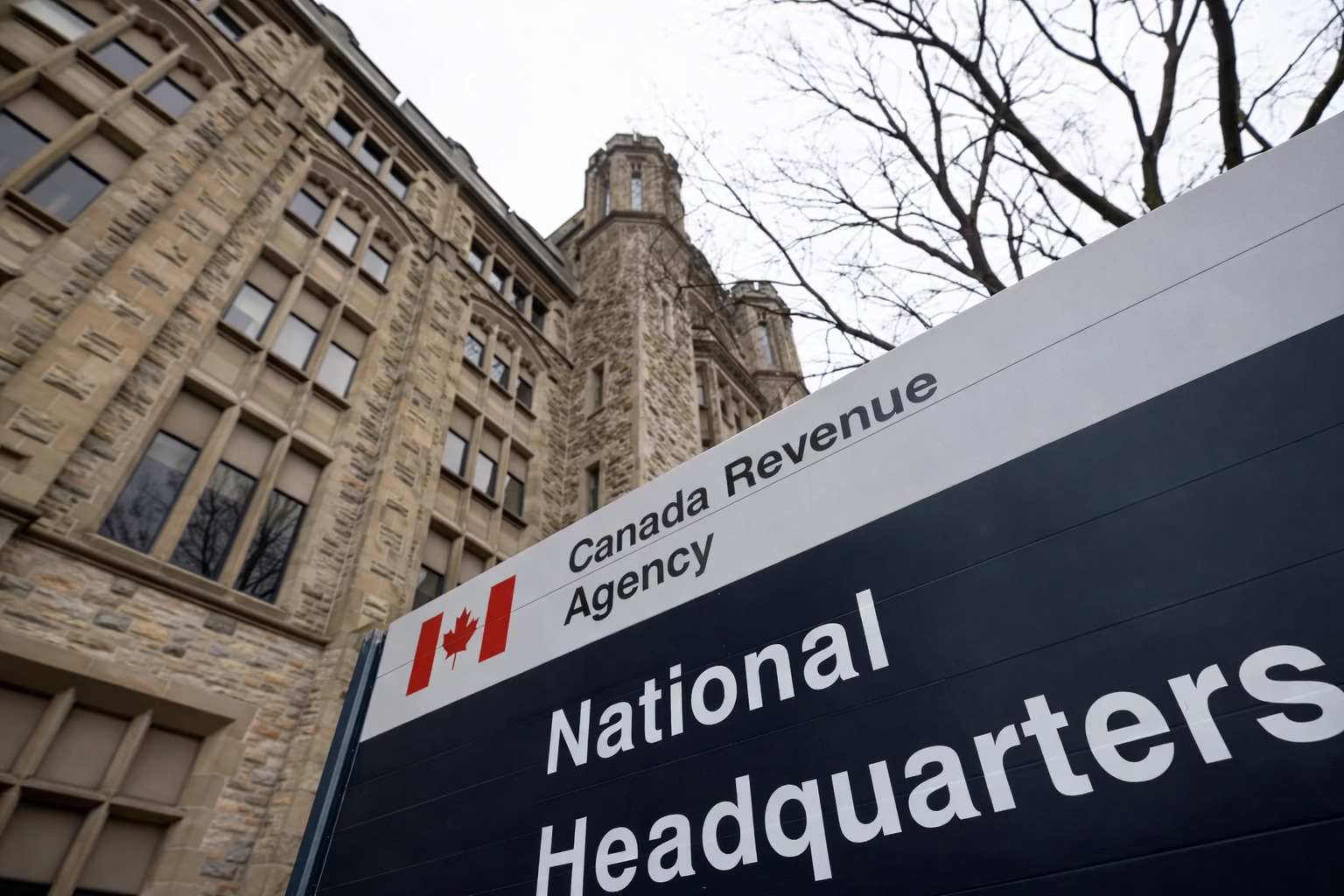
Canada Revenue Agency faces pressure to reform charity audits after report highlights bias risks

A new independent report is calling for structural changes within the Canada Revenue Agency (CRA), arguing that its approach to monitoring potential terrorist financing in the charitable sector has exposed serious weaknesses—particularly in a long-running audit involving the Muslim Association of Canada (MAC).
The findings go beyond a single case. They raise broader questions about how government institutions balance national security concerns with fairness, transparency, and cultural understanding in regulatory oversight.
A system under scrutiny
The report, authored by University of Manitoba professor Michelle Gallant, examines how the CRA conducted its audit of MAC—an organization that operates mosques, schools, and community centres used by more than 150,000 Canadians annually.
Gallant concludes that the agency’s effort to detect and prevent potential links to extremist financing was “seriously deficient” in this case. While the objective of preventing abuse within the charitable system remains legitimate, the execution, she argues, lacked consistency, clarity, and procedural fairness.
This is not the first time concerns have been raised. Previous reviews, including those from national security oversight bodies, have also pointed to gaps in how charities are selected for audits, warning that current practices may introduce unintended bias.
The risk of association-based enforcement
A central issue identified in the report is the CRA’s reliance on associative analysis—evaluating organizations based on their perceived connections to other entities or individuals.
While such methods are often used in financial intelligence, Gallant highlights their limitations when applied to civil society organizations. In complex community networks, especially those rooted in religious or cultural groups, connections are not always indicative of risk.
This creates a structural problem. When associations are treated as evidence, legitimate activity can be misinterpreted. The result is a system that risks overreach—where suspicion expands faster than verification.
The report warns that this approach may lead to “over-inclusion,” capturing organizations or actions that have no actual link to wrongdoing, while simultaneously failing to distinguish between risk and normal community engagement.
Cultural understanding as a regulatory gap
Another key recommendation focuses on institutional knowledge. The report argues that the CRA must develop a deeper understanding of cultural and religious contexts—particularly Islam—when conducting audits involving Muslim charities.
Without this awareness, standard audit frameworks may misread practices, relationships, or governance structures that are entirely legitimate within their context.
This is not framed as a matter of sensitivity, but of accuracy. A regulatory system that lacks cultural literacy risks producing flawed conclusions—not because of intent, but because of incomplete interpretation.
Transparency and guidance as missing tools
Beyond internal processes, the report highlights a lack of proactive communication between the CRA and the charitable sector.
Currently, organizations are often left to navigate compliance expectations without clear guidance on what may be considered high-risk interactions. This creates uncertainty and exposes charities to retrospective scrutiny.
Gallant suggests that the CRA could play a more active role by publishing clearer audit methodologies and, potentially, providing updated guidance on entities or activities that may raise concerns.
Such measures would shift the system from reactive enforcement to preventive clarity—allowing charities to make informed decisions before issues arise.
A contested audit with lasting impact
The audit of the Muslim Association of Canada began in 2015 and has since become a focal point for debate around fairness in regulatory oversight.
MAC has consistently argued that the process was shaped by systemic bias and challenged it in court, citing concerns related to equality, religious freedom, and freedom of association.
Federal authorities, for their part, pointed to preliminary findings that raised questions about compliance with charitable obligations, including alleged links to foreign political activities and other regulatory issues.
Despite years of scrutiny, the organization remains a registered charity. It has entered into a compliance agreement addressing governance-related matters, with financial penalties that are currently under appeal.
Institutional response and ongoing pressure
The CRA has declined to comment directly on the report’s recommendations, maintaining its position of not responding to third-party analyses.
However, recent statements indicate that the agency has already begun implementing internal reforms. These include efforts to address unconscious bias among staff and to strengthen oversight mechanisms within its audit processes.
External watchdogs have acknowledged some progress but continue to emphasize the need for structural change—particularly in how risk is defined, assessed, and communicated.
A broader question of balance
At its core, the issue extends beyond a single audit or organization. It reflects a broader challenge facing regulatory systems in complex societies.
How should governments enforce laws designed to prevent abuse without undermining trust among the very communities they regulate?
How can institutions distinguish between risk and association without expanding the scope of suspicion beyond what evidence supports?
And perhaps most importantly, how can oversight remain effective without becoming opaque or uneven in its application?
Conclusion
The report on the CRA’s audit practices does not argue against regulation. It questions how that regulation is designed and executed.
The goal of preventing financial abuse within the charitable sector remains critical. But the methods used to achieve that goal must be precise, transparent, and proportionate.
Otherwise, the system risks producing a different kind of failure—one where the effort to protect integrity begins to erode trust.
And in a system built on public confidence, that may be the most significant risk of all.

Daniel Hughes
Sustainability & Policy Correspondent
Daniel is interested in how environmental policy translates into real urban change. He specializes in sustainable mobility, climate-focused city planning, and the political frameworks behind transport systems. His writing brings together data, policy analysis, and on-the-ground impact, offering a clear view of how sustainability initiatives affect everyday urban life.
Advertise With Toronto Union 24
Reach over 500,000 engaged Canadian readers monthly. Premium placements available for Q2 2026.
Learn More Liam Carter
  Aila Kenuak