
How to Start Commuting to Work by Bike
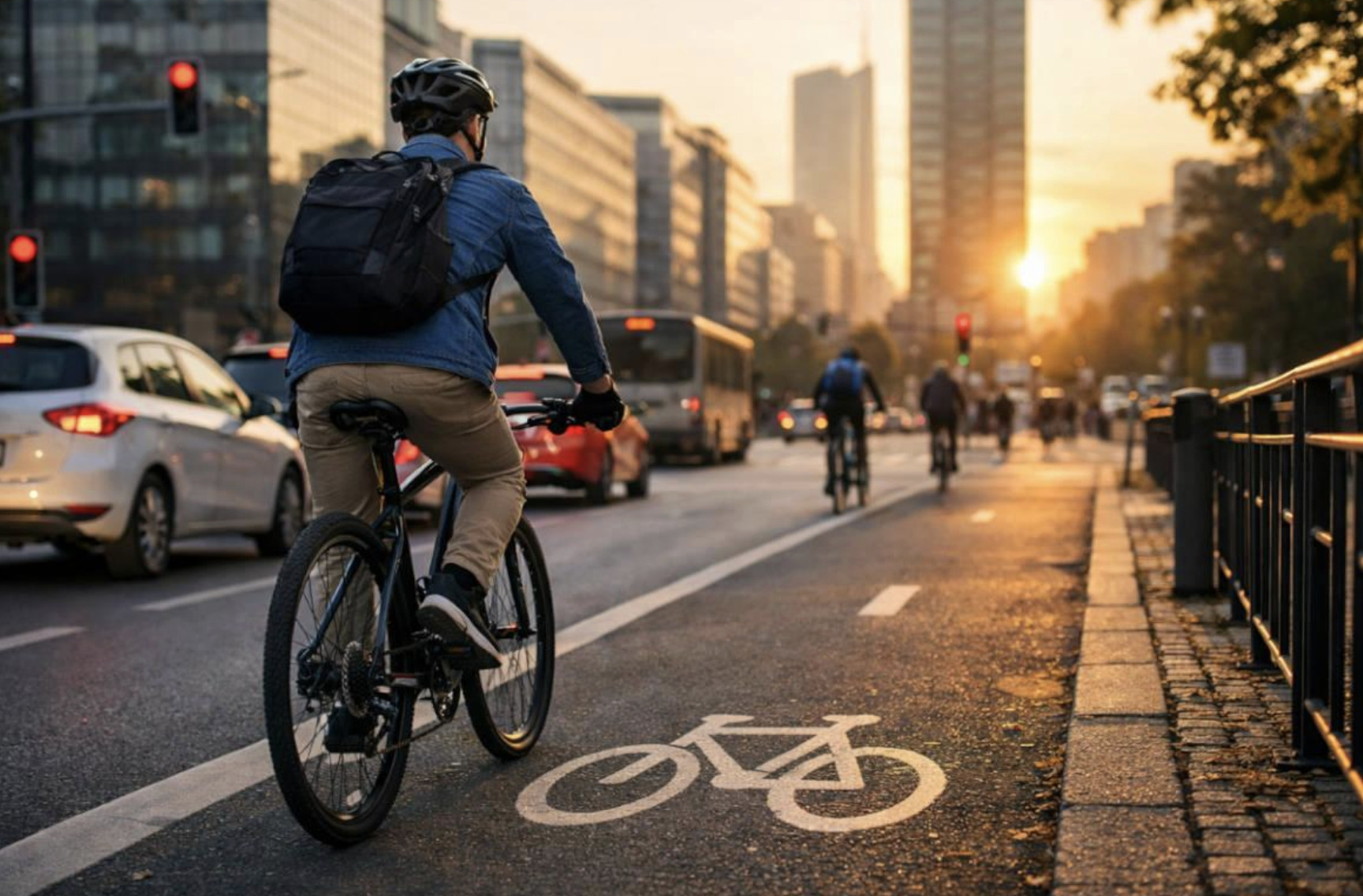
Bike commuting is one of those rare decisions that improves almost every part of your day at once. It saves money, builds fitness into hours you were spending anyway, sidesteps traffic and transit delays, and — as most people who try it discover — turns the dead time between home and work into the part of the day they actually enjoy. Yet the gap between "I should bike to work" and actually doing it can feel wide. This guide closes it, with a practical, no-nonsense walk through everything a first-time commuter needs to know.
Start with the route, not the bike
The most common mistake new commuters make is obsessing over equipment before they have ridden the route even once. Reverse that order. The single biggest factor in whether bike commuting sticks is whether the journey itself is pleasant, and that is determined almost entirely by the path you take.
Spend an evening or a weekend planning and test-riding your route with no pressure to be at work. Mapping tools with cycling modes will steer you toward bike lanes, quiet streets, and trails rather than the fastest car route, which is often the most hostile one. The shortest way is rarely the best way; a route that adds five minutes but keeps you on calm streets and protected lanes is worth far more than a direct blast down an arterial road. Ride it once on a low-stakes day, note the tricky intersections, and adjust. Once the route feels comfortable, the habit follows easily.
Choosing a bike that fits the job
You do not need an expensive or specialized bike to commute — the best commuter bike is very often the one you already own or can buy used for a modest sum. What matters is fit and reliability, not prestige. A bike that is the right size for your body and mechanically sound will serve you better than a flashy one that does not fit.
That said, certain traits make commuting easier. Reasonably robust tires resist the punctures that city debris causes. Mounting points for a rack and mudguards let you carry a bag off your back and stay dry. Reliable brakes and a gear range suited to your terrain make hills and stops painless. Hybrid and commuter-specific bikes are built around exactly these priorities, and electric bikes have transformed the equation for longer or hillier commutes, flattening the effort so you arrive without being drenched. If you are weighing options, our companion guide on how to choose the right bike breaks the categories down in detail.
Safety is a skill, not just a helmet
Riding safely in traffic is less about equipment and more about behaviour and positioning, and it is a skill that improves quickly with practice. The core principle is visibility and predictability: make yourself easy to see and easy to anticipate.
In practice this means riding assertively rather than timidly. Hugging the gutter invites drivers to squeeze past too closely; taking a clear, confident position in the lane where needed makes you visible and discourages dangerous overtaking. Signal your intentions clearly and early, make eye contact with drivers at junctions, and assume you have not been seen until you have confirmation. Lights are non-negotiable — a bright front and rear light, used even in daylight, dramatically increase how early drivers notice you. A helmet is sensible, but it is the last line of defence, not the first; your riding decisions prevent far more incidents than any piece of gear.
Gear that actually matters
It is easy to drown in accessories, so focus on the few that genuinely change the experience. Lights come first, for the safety reasons above. A good lock, appropriate to where you park, protects the investment; in higher-theft areas a solid U-lock is worth the weight. A way to carry your things off your body — a rack with panniers or a well-designed backpack — keeps your back cool and your ride balanced.
Weather gear is the other high-value category, because the thing that ends most commuting habits is not distance but discomfort. A packable waterproof jacket and mudguards turn a rainy forecast from a dealbreaker into a non-event. Beyond that, resist the urge to accumulate. Commuting rewards simplicity; the more friction-free your setup, the more likely you are to keep doing it.
Handling clothes, sweat, and arriving presentable
The practical logistics of arriving at work are what people worry about most, and they are more solvable than they seem. The key insight is to ride at a relaxed pace. Commuting is not a workout unless you want it to be; ride gently enough that you do not overheat, and most of the sweat problem disappears, especially in cooler months.
For longer or warmer commutes, a few habits help. Keep a set of work clothes or basic toiletries at the office so you are not carrying them daily. If your workplace has a shower, use it; if not, a quick freshen-up and a few minutes to cool down before changing works fine for most people. Ride in comfortable clothing and change on arrival rather than sweating through your work outfit. None of this requires athletic dedication — just a little forethought, which quickly becomes routine.
Build the habit gradually
You do not have to commit to riding every day in every season from the start. In fact, trying to do so is a good way to burn out. Treat bike commuting as something you ramp into. Start with the days when the weather is good and your schedule is forgiving — perhaps once or twice a week — and let the habit grow from there as your confidence and fitness build.
This gradual approach also lets you solve problems one at a time rather than all at once. You learn your route, sort out your gear, and figure out the clothing logistics across several low-pressure rides instead of a single overwhelming plunge. Before long, the days you ride outnumber the days you do not, and the commute stops feeling like a decision and starts feeling like simply how you get to work.
The payoff
It is worth being clear about why this is worth the effort, because the benefits compound. Financially, replacing even part of your commuting costs with a bike adds up quickly over a year. Physically, you fold exercise into time you were already spending in transit, which is the only kind of exercise most busy people reliably sustain. And there is a quieter benefit that regular commuters mention most of all: the mental one. Arriving at work already awake and a little energized, and decompressing on the ride home, reliably beats sitting in traffic or on a crowded train.
Bike commuting is not about being an athlete or a purist. It is about a practical, repeatable way to move through your city that happens to save money, improve health, and make an ordinary day better. Plan a good route, ride a bike that fits, learn to handle traffic with confidence, and start small. The rest takes care of itself.
Daniel Hughes
Sustainability & Policy Correspondent
Daniel is interested in how environmental policy translates into real urban change. He specializes in sustainable mobility, climate-focused city planning, and the political frameworks behind transport systems. His writing brings together data, policy analysis, and on-the-ground impact, offering a clear view of how sustainability initiatives affect everyday urban life.
Advertise With Toronto Union 24
Reach over 500,000 engaged Canadian readers monthly. Premium placements available for Q2 2026.
Learn More Ethan Walker
  Liam Carter