
Winter Cycling in a Canadian City Without the Fear
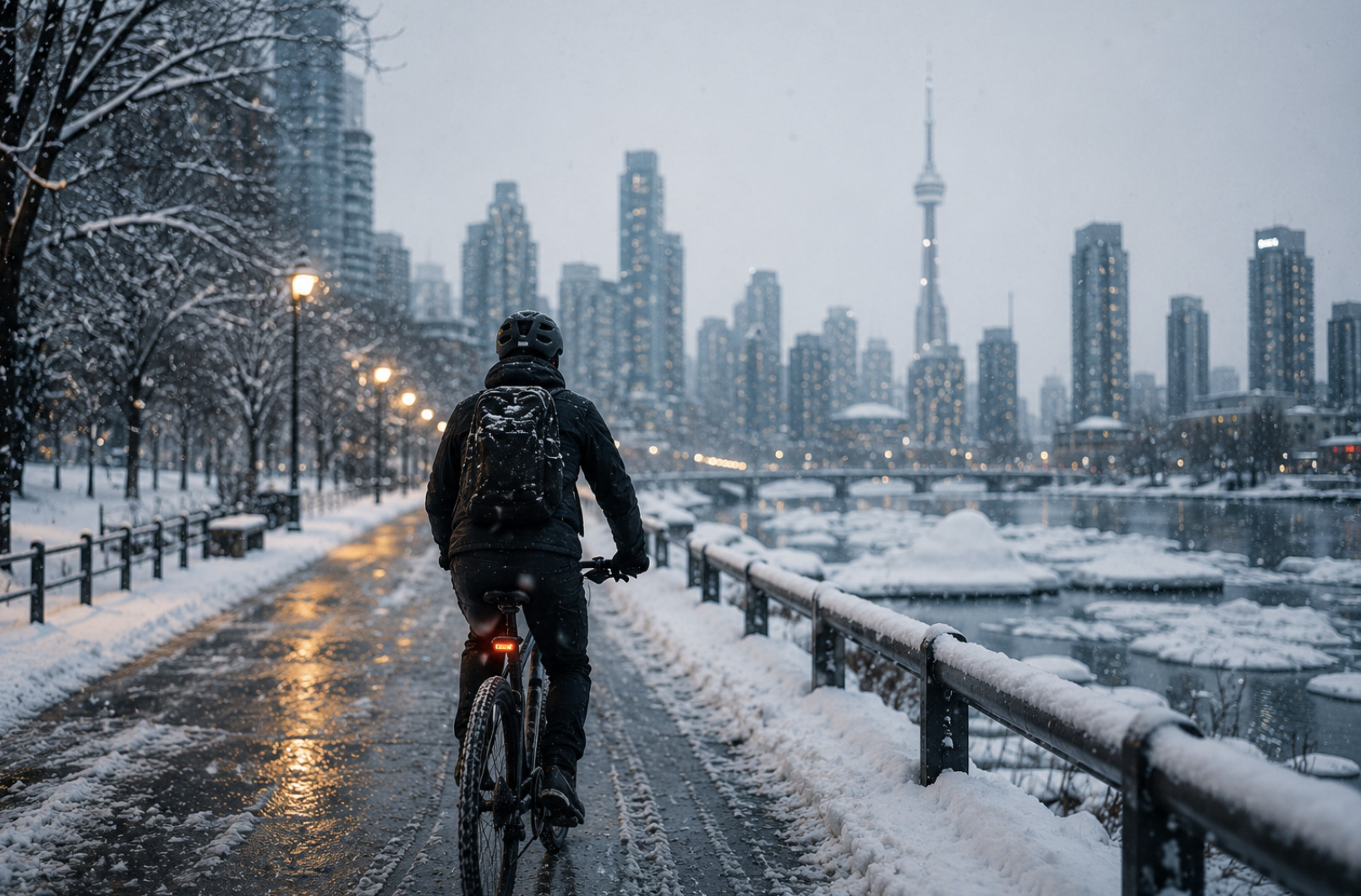
To most people, the idea of cycling through a Canadian winter sounds somewhere between uncomfortable and reckless. Snow, ice, salt, darkness at five in the afternoon, temperatures that bite through anything — it seems like exactly the season to put the bike away until spring. Yet in cities across the country, a small and quietly growing number of riders keep pedalling all winter long, and most of them will tell you the same thing: it is far more manageable than it looks, and often more pleasant than the alternatives. Winter cycling is not about toughness. It is about preparation, and once you understand a few basics, the fear tends to melt faster than the snow.
The cold is a clothing problem, not a barrier
The first and most important shift is to stop thinking of cold as an obstacle and start thinking of it as a clothing question with a known answer. Cyclists have a useful saying: there is no bad weather, only bad clothing. Riding generates a surprising amount of heat, which means the goal is not to bundle up as heavily as possible but to dress so that you are slightly cool when you start and comfortable once you are moving. Overdressing leads to sweat, and sweat in winter leads to a chill — the opposite of what you want.
The reliable approach is layering. A base layer that moves moisture away from your skin, an insulating middle layer, and a windproof outer shell together handle a wide range of conditions, and you can add or remove pieces as the temperature changes. Beyond the core, the details matter most: extremities suffer first, so warm gloves, something to cover your ears and head under the helmet, and a way to protect your face on the coldest days make an enormous difference. Warm, waterproof footwear keeps the ride enjoyable rather than an exercise in endurance. None of this is exotic or expensive, and much of it is clothing people already own. Dressed properly, the cold stops being frightening and becomes simply the weather you ride in.
Preparing the bike for snow and salt
Your bike also needs some consideration, though less than you might fear. The single biggest factor in winter riding is traction, and here tyres do most of the work. Wider tyres run at slightly lower pressure grip better on snow and slush, and for genuinely icy conditions, studded winter tyres transform the experience, biting into ice in a way ordinary rubber cannot. Many winter riders consider studded tyres the one upgrade most worth making, because confidence on ice is what separates a nervous ride from a relaxed one.
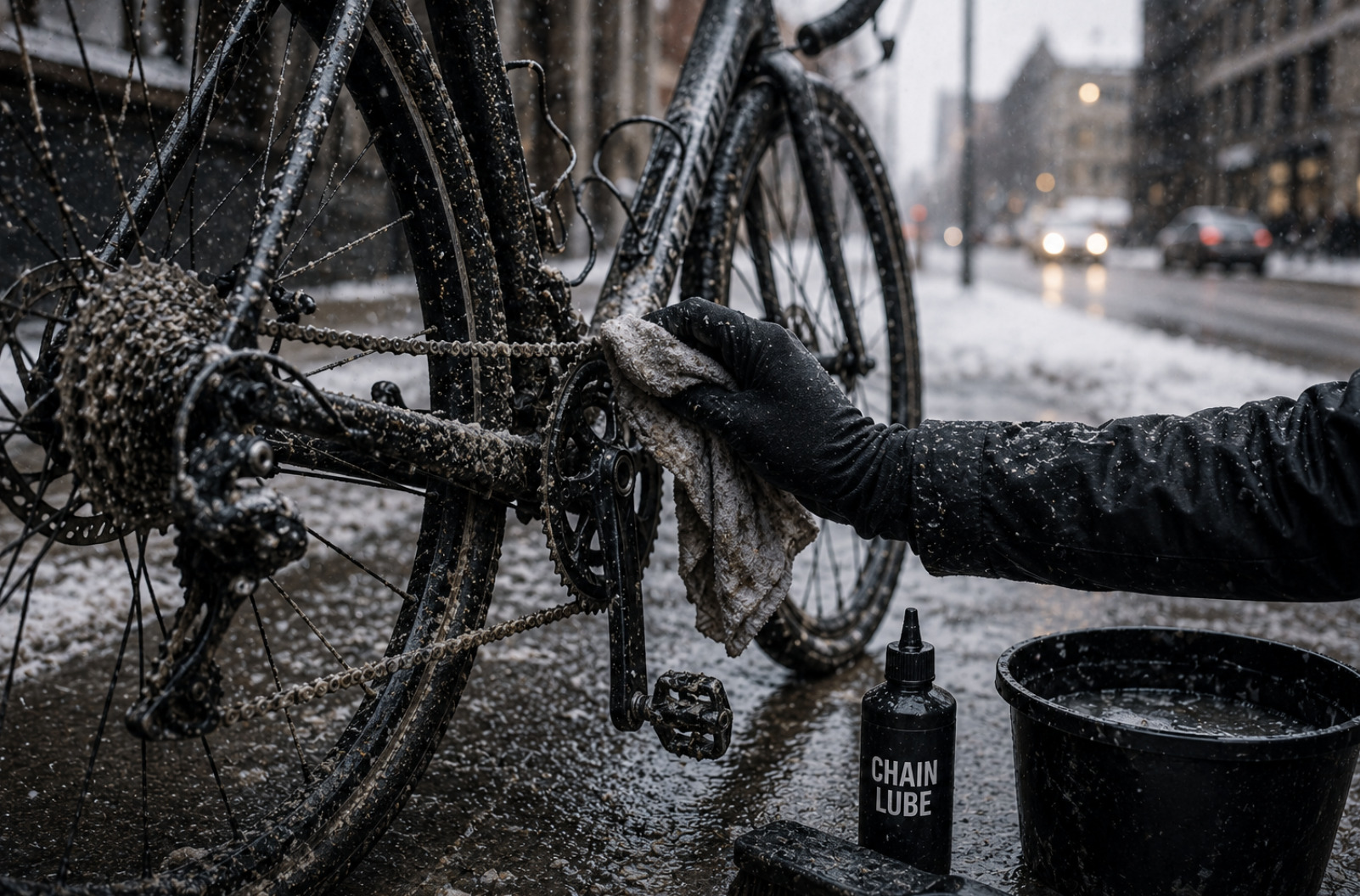
The other winter reality is salt. The same salt that keeps roads passable is hard on a bicycle, working its way into the drivetrain and accelerating wear and corrosion. This makes basic maintenance more important in winter, not less: keeping the chain clean and lubricated, and wiping the bike down periodically to clear away salt and grime, keeps everything running smoothly through the season. If you are new to looking after a bike, the fundamentals in essential bike maintenance every cyclist should know carry straight into winter. Some riders keep a cheaper, rugged "winter bike" for exactly this reason, sparing their better machine from the harshest months, but it is far from required to get started.
Riding smart when the light is short
Winter changes how you ride as much as what you wear, and the biggest adjustment is visibility. The days are short, so a large share of winter riding happens in darkness or low light, which makes lights and reflective gear not optional extras but essential equipment. A bright front light, a red rear light and reflective elements on your body and bike ensure that drivers see you clearly in conditions where seeing anything is already harder. In winter, being visible is the foundation everything else rests on.
The way you handle the bike matters too. Snow and ice reward a smooth, gentle style: braking earlier and more softly, taking corners slowly and upright, and avoiding sudden movements that can break traction. Give yourself more room and more time than you would in summer, and stay alert to the surface, since a patch that looks like wet road may be ice. Route choice becomes part of the craft as well; a quieter street that is well cleared often beats a direct route buried in snow. These habits are simply the good sense of winter driving applied to two wheels, and they come quickly with a little practice. Much of the groundwork is the same as any bike commuting, covered in how to start commuting to work by bike; winter just adds a layer of care on top.
Why anyone bothers
With all this preparation, a fair question is why anyone rides through winter at all rather than taking transit or driving. The practical answers are real: a bike keeps moving when roads snarl and transit crowds, it costs almost nothing to run, and it builds activity into a season when most people move far too little and feel the worse for it. For a city commuter, a well-equipped winter bike is often the most reliable way to get around when everything else slows down.
But regular winter riders tend to describe something beyond the practical. There is a particular quiet to a city under snow, a briskness to cold air that leaves you more awake than any commute has a right to, and a small daily satisfaction in meeting the season head-on instead of hiding from it. Winter cycling asks a little more than the warmer months, but it gives something back in return — a sense of the city and the season that most people, sealed in cars and buses, never get to feel. Start with the right clothing and a cautious first ride on a mild day, and you may find, as many Canadians have, that winter is not the end of cycling season at all. It is just a different, and surprisingly rewarding, way to ride.

Liam Carter
Street Culture & Nightlife Journalist
Liam focuses on the cultural layer of urban life — music, street scenes, and the rhythm of cities after dark. He writes about how cycling, nightlife, and creative communities intersect, shaping new forms of social interaction and identity. His work has been featured in independent media platforms and urban culture publications, where he has covered festivals, underground scenes, and emerging city trends.
Advertise With Toronto Union 24
Reach over 500,000 engaged Canadian readers monthly. Premium placements available for Q2 2026.
Learn More Ethan Walker
  Daniel Hughes