
Toronto isn’t chasing nightlife anymore it’s building something else
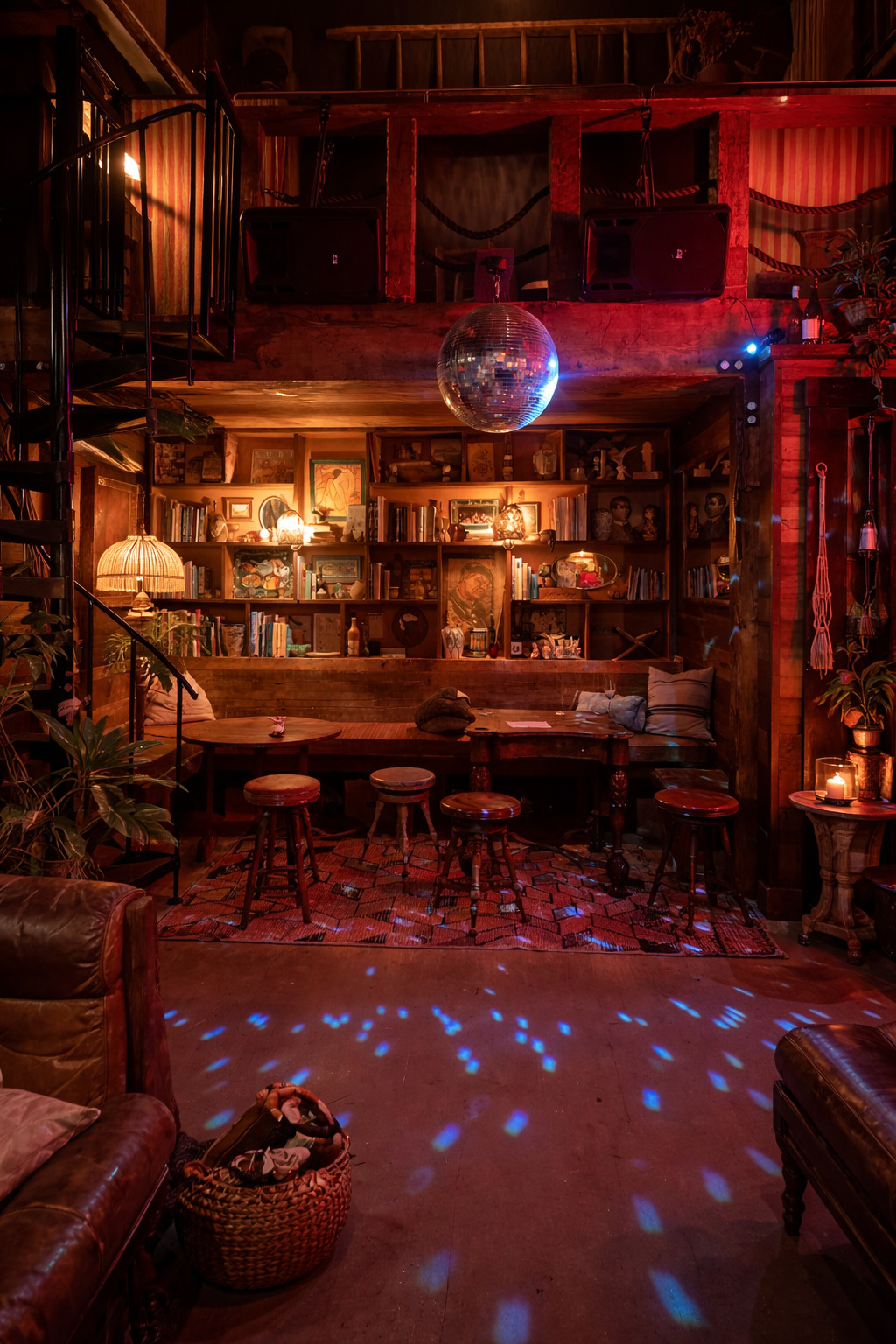
Toronto has always been a city of movement. People arrive, leave, adapt, rebuild. But in 2026, the pace of change is no longer just visible in construction cranes or new condo towers. It’s embedded in daily life — in how people move, spend, work, and even socialize.
The shift is not dramatic. It’s constant.
And that’s exactly what makes it powerful.
A city where routine is no longer stable
For years, Toronto offered a relatively predictable urban rhythm. Work downtown, commute from surrounding neighborhoods, go out on weekends, repeat. That structure is now quietly dissolving.
Remote and hybrid work have permanently altered how people interact with the city. Downtown is no longer the sole center of activity. Neighborhoods like Queen West, Leslieville, and Junction are becoming micro-centers — places where people live, work, and socialize without needing to cross the city.
This decentralization is changing not only movement patterns, but also identity. Toronto is becoming less of a single city and more of a network of local ecosystems.
The cost of living is reshaping behavior
It is impossible to talk about Toronto in 2026 without addressing affordability.
Rising rent, increasing grocery prices, and the overall cost of living have forced residents to rethink everyday decisions. Eating out less frequently, choosing local businesses over chains, sharing spaces, and optimizing transportation are no longer trends — they are strategies.
But this pressure is also creating new forms of adaptation.
Pop-up markets, community-driven events, and smaller independent venues are gaining traction. People are not necessarily spending less — they are spending differently, prioritizing value and experience over convenience.
Public space is becoming more important
As private space becomes more expensive, public space becomes more valuable.
Parks, waterfront areas, and pedestrian-friendly streets are no longer just amenities — they are essential parts of daily life. The city’s investment in outdoor infrastructure, bike lanes, and shared spaces reflects this shift.
Places like Trinity Bellwoods Park and the Harbourfront are not just leisure spots. They function as social hubs, informal workspaces, and cultural meeting points.
This redefinition of public space is subtle but significant. It signals a move toward a more collective urban experience.
Mobility is no longer just about getting somewhere
Transportation in Toronto has always been a challenge, but the conversation is changing.
It is no longer just about speed or efficiency. It’s about flexibility.
Cycling infrastructure continues to expand, and more residents are choosing bikes or e-scooters for short distances. Public transit remains central, but expectations are shifting — people want reliability, but also comfort and integration with other modes of transport.
Ride-sharing, micro-mobility, and hybrid commuting patterns are creating a more layered mobility system.
In practical terms, this means that how you move through Toronto is becoming more personal — and more strategic.
A different kind of social life
Toronto’s social life is not shrinking — it is recalibrating.
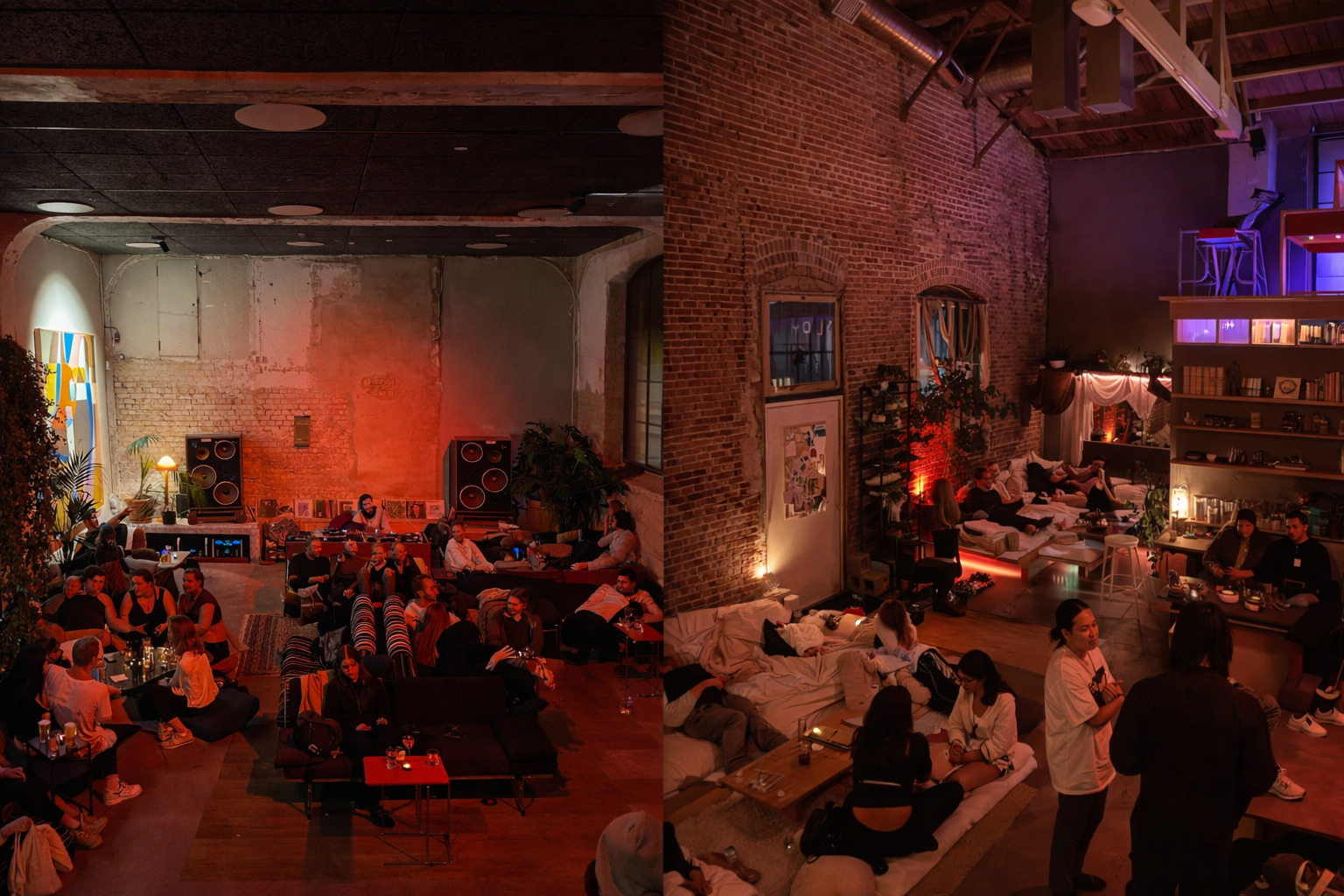
What once revolved around scale and density is now increasingly defined by intention. The era of defaulting to large, anonymous venues is уступает место более точным форматам: small-format dinners, curated gatherings, concept-driven events, spaces where the experience is designed rather than improvised.
This is not a retreat from urban energy. It is a refinement of it.
The shift is measurable. According to recent Canadian urban lifestyle surveys, over 60% of city residents now prefer smaller, experience-led social settings over large nightlife venues, while discretionary spending is increasingly directed toward “events with narrative” — spaces that offer atmosphere, meaning, or identity rather than just access.
In Toronto, this trend feels sharper than elsewhere.
The cost of living, combined with the city’s accelerated pace, has introduced a new filter: people are no longer asking where to go, but whether it is worth going at all. Time, like money, is being budgeted with greater discipline.
As one local cultural programmer put it:
“People don’t go out to fill time anymore — they go out to justify it.”
The result is a quieter but more deliberate social ecosystem. Fewer nights out, perhaps — but each one carrying more weight, more expectation, more purpose.
Toronto is not becoming less social. It is becoming more discerning.
The influence of newcomers
If Toronto’s social rhythm is changing, its cultural core remains in constant motion.
The city continues to rank among the most diverse in the world, with over 50% of its population born outside Canada. Each year, tens of thousands of new residents arrive — not only bringing languages and traditions, but reshaping expectations of what urban life should feel like.
This influence is not abstract. It is visible, immediate, structural.
Food culture evolves first — new formats, hybrid cuisines, late-night concepts that blur the line between restaurant and social space. But the transformation runs deeper: business models shift, service culture adapts, and entire neighborhoods begin to reflect new patterns of living and interaction.
In areas like the West End, Scarborough, and parts of North York, this process is especially visible. What used to be static districts are now fluid environments, where identity is continuously negotiated rather than preserved.
The speed of this transformation is part of Toronto’s power — and its tension.
A city that is always absorbing new influences rarely settles into a fixed version of itself. For residents, this creates a paradox: the excitement of constant reinvention alongside the difficulty of defining what Toronto is at any given moment.
And yet, this instability is precisely what gives the city its edge.
Toronto does not rely on a single narrative.
It operates through accumulation — of cultures, expectations, and lived experiences layered over time.
Not a finished identity, but an evolving one.
And in that ongoing transformation, the city finds both its complexity and its relevance.
Digital life meets physical city
Another defining aspect of urban life in 2026 is the overlap between digital and physical spaces.
Apps dictate where people go, what they eat, how they move. Local discoveries are often algorithm-driven. Yet, at the same time, there is a growing desire to disconnect — to experience the city without mediation.
This tension creates an interesting dynamic.
Toronto is both highly connected and increasingly introspective. People rely on technology, but they also seek moments that feel unfiltered.
A city still defining its own logic
What makes Toronto compelling right now is not that it has solved its contradictions. It hasn’t. Affordability is still strained. Infrastructure is still catching up. The tension between growth and livability has not disappeared — it has simply become permanent.
But the deeper shift is not in whether these problems are resolved. It is in how the city absorbs them.
Toronto is no longer reacting in cycles of crisis and correction. It is learning to operate inside its own instability — to adjust, redistribute, reconfigure in real time. The city is not stabilizing. It is becoming adaptive by design. And that is the answer. The change is not visible in policies or announcements, but in behavior — in how people reorganize their routines, their spaces, their expectations. Habits become infrastructure. Everyday decisions become the mechanism through which the city evolves.
Toronto is still figuring itself out.
But that process is no longer a weakness. It is the system.
Conclusion
Toronto in 2026 is not changing in bursts — it is refining itself in real time.
The shift is subtle but structural: not in what the city builds, but in how it is lived.
And that is what makes it powerful — transformation that doesn’t announce itself, but quietly becomes irreversible.

Oliver Grant
Travel & Active Lifestyle Writer
Oliver explores cities through movement, focusing on cycling as a way to experience culture, architecture, and local identity. He writes about bike travel, urban routes, and active lifestyles, combining storytelling with practical insight. His work has been recognized in digital travel journalism circles, where he has contributed to features on European cycling culture and experiential travel trends.
Advertise With Toronto Union 24
Reach over 500,000 engaged Canadian readers monthly. Premium placements available for Q2 2026.
Learn More Daniel Hughes